My Hero Academia: Redefining Heroism in the Modern Anime Era
- Category: Anime, Action, Adventure, Superhero, School, Shonen
- Release Date: 2016 – Present (Seasons 1-8)
- Cast (Voice Actors): Daiki Yamashita (Izuku), Nobuhiko Okamoto (Bakugo), Kenta Miyake (All Might), Ayane Sakura (Uraraka), Kaito Ishikawa (Iida)
- Language: Japanese (Original), English, Spanish, French, Portuguese, German (Dubbing available)
- Duration: approx. 24 Minutes per Episode
- Director: Kenji Nagasaki, Masahiro Mukai, Naomi Nakayama
- Studio: BONES
In a landscape saturated with superhero media, from the Marvel Cinematic Universe to the gritty deconstructions of The Boys, it takes something truly special to stand out. My Hero Academia (known in Japan as Boku no Hero Academia) has not only stood out but has risen to become one of the defining pillars of modern anime. Adapted from Kohei Horikoshi’s hit manga, this series by the renowned Studio BONES is a love letter to western comics wrapped in the heart and soul of classic Japanese shonen storytelling.
What begins as a story about a powerless boy in a superpowered world evolves into a sprawling epic about legacy, war, societal collapse, and the true weight of the word “Hero.” For viewers on fmovies.tr looking for a series that balances high-octane action with tear-jerking emotional beats, My Hero Academia is an absolute must-watch.
The Plot: From Zero to Number One
The premise of My Hero Academia is instantly engaging. The setting is a world where 80% of the human population has evolved to possess superpowers, known as “Quirks.” These abilities range from the mundane (floating small objects) to the catastrophic (creating explosions or controlling gravity). In this society, “Hero” is no longer just a title; it is a government-sanctioned profession.
Enter Izuku Midoriya (hero name: Deku), a young boy with green hair, freckles, and a heart too big for his body. Tragically, Izuku belongs to the rare 20% of the population born “Quirkless.” Despite the bullying he endures—specifically from his childhood friend-turned-tormentor Katsuki Bakugo—Izuku studies hero movements obsessively, dreaming of saving people with a smile, just like his idol, the Symbol of Peace, All Might.
The Turning Point
Fate intervenes when Izuku displays the heart of a true hero by rushing into danger to save Bakugo from a villain, despite having no powers. This act of courage catches the eye of All Might, whose own health is failing. In a twist of destiny, All Might reveals that his Quirk, “One For All,” is transferable. He chooses Izuku as his successor.
The series chronicles Izuku’s enrollment in U.A. High School, the Ivy League of hero academies. But this is not merely a school drama. As Izuku struggles to control his immense new power without shattering his bones, a dark organization known as the League of Villains rises from the shadows, intent on destroying the fragile society All Might has built.
The Characters: A Class of Icons
While Izuku is the protagonist, My Hero Academia thrives because of its massive, well-developed ensemble cast. Class 1-A is filled with characters who could easily lead their own shows.
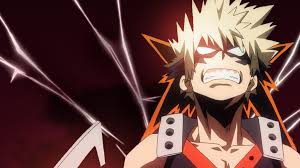
- Katsuki Bakugo: Perhaps the most complex character in the series. Initially presented as a one-dimensional bully with an explosive Quirk, his journey from arrogance to understanding the true meaning of strength is one of the best redemption arcs in anime history.
- Shoto Todoroki: The son of the Number 2 Hero, Endeavor. Shoto possesses a “Half-Cold Half-Hot” Quirk. His storyline deals with abuse, trauma, and the struggle to forge one’s own identity separate from the sins of a parent.
- Ochaco Uraraka: A bubbly girl with gravity powers who wants to be a hero to support her parents financially. Her evolution from a support character to a hero who questions the morality of the system is subtle and powerful.
- The Villains: The antagonist, Tomura Shigaraki, is a dark mirror to Izuku. Groomed by the ancient evil “All For One,” Shigaraki represents the people society left behind. The series does an incredible job of humanizing its villains, making the eventual conflicts feel tragic rather than just “good vs. evil.”
Production and Direction: The Studio BONES Standard
Animation studio BONES is legendary for a reason (known for Fullmetal Alchemist: Brotherhood and Mob Psycho 100). With My Hero Academia, they have maintained a remarkably high standard over nearly a decade of production.
Directors Kenji Nagasaki, Masahiro Mukai, and Naomi Nakayama have expertly managed the pacing of the series. The action sequences are fluid, dynamic, and heavy-hitting. The visual representation of Quirks—from the lightning surrounding Deku to the massive glaciers created by Todoroki—is spectacular. The show uses a vibrant, comic-book-inspired color palette that pops off the screen, utilizing on-screen text effects that mimic manga panels.
The Soundtrack
No review is complete without mentioning the music by Yuki Hayashi. The track “You Say Run” has become an internet phenomenon, synonymous with “hype.” The orchestral score swells perfectly during emotional climaxes, elevating standard fight scenes into operatic battles of will.
Critical Review: More Than Just Fighting
It is easy to dismiss My Hero Academia as a standard shonen anime where the main character punches harder to win. However, that assessment misses the thematic depth that develops, particularly from Season 6 onwards.
The Burden of Legacy
The central theme of the show is “Legacy.” It asks what we pass on to the next generation. All Might passes on his power and hope, but the villain All For One passes on hatred and resentment. The show explores how the flaws of the older generation fall upon the shoulders of the youth. The “Hero Society” depicted is not a utopia; it is a fragile system held together by one man (All Might), and when he falls, chaos ensues.
From School Life to War
The tonal shift of the series is masterful. The early seasons (1-3) give us the “School Life” vibe—sports festivals, exams, and training camps. It feels safe and optimistic. However, as the series progresses into the “Paranormal Liberation War” arc and the “Dark Deku” arc, the safety wheels come off. Characters die. Cities are destroyed. The students are forced to become child soldiers in a war they didn’t start. This progression keeps the stakes feeling real and consequential.
Moral Ambiguity
Later seasons challenge the concept of heroism itself. Is it right to save a villain who is trying to kill you? Are heroes just enforcers of the status quo? The character Hawks and the backstory of the villain Twice introduce shades of grey that make the narrative intellectually stimulating for adult audiences, while still remaining accessible to younger viewers.
A Modern Classic
My Hero Academia is a triumph of the genre. It takes the familiar tropes of superhero comics and Japanese manga and refines them into a polished, high-energy, and deeply emotional experience.
While it has occasional pacing issues typical of long-running anime, the highs are incredibly high. The journey of Izuku Midoriya is inspiring, heartbreaking, and exhilarating. Whether you are a veteran anime fan or a newcomer looking for your first series, My Hero Academia offers a world worth diving into. It reminds us that being a hero isn’t about having a strong Quirk; it’s about meddling where you don’t belong to save a life.